With global supply chains being rebuilt, regulations tightening, and corporate ESG obligations moving into mandatory disclosure, the exhibition industry is shifting from short-term build-outs to sustainable environments. TSNN reports show that ESG has become the default rule for entering international exhibition ecosystems.
2026 is positioned as the implementation year: EU CSRD, the U.S. SEC climate disclosure rule, and the UK/France green event frameworks require exhibitors to document booth materials, logistics, energy use, and waste handling. For Chinese exhibitors going global, ESG is now a market entry condition rather than a branding exercise.
Key Takeaways
- ESG disclosure becomes mandatory: materials, logistics, and energy data must be traceable
- Modular, reusable systems will replace one-off carpentry; material passports turn mainstream
- Transportation emissions enter carbon accounting, driving local builds and lightweight structures
- Chinese exhibitors face gaps in supply chain, budget structure, and aesthetic logic versus ESG goals
- Service providers should build green supply chains, compliance documents, carbon reports, and material tracking
How ESG Rewrites the Exhibition Framework
Exhibitions are turning into carbon-managed platforms. EU CSRD and SEC climate rules require companies to record exhibition activities, which means:
- Material choices: Carpentry, profiles, fabrics must provide traceable data on fire ratings, recycled ratio, and dismantling plans.
- Energy management: Booth electricity, lighting load, and screen runtime are part of carbon footprints, affecting ESG scores.
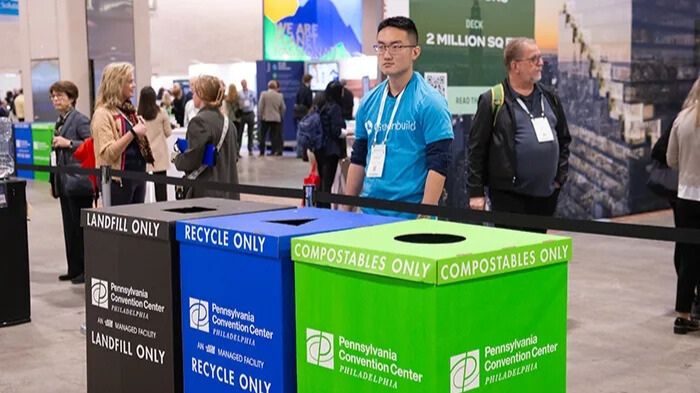
- Waste handling: Organizers must give sorting and recycling proof. Exhibitors lacking compliant dismantling records will be flagged.
- Supply-chain disclosure: Contractors, logistics providers, and material vendors need ESG credentials to qualify for major buyers.
As a result, global buyers and sponsors now evaluate “supply-chain sustainability” upfront, making exhibitions the first window into a company’s ESG performance.
Emerging Trends in ESG-led Exhibitions
- Material passports: Modular aluminum, reusable panels must record origin, carbon data, and dismantling guidance for repeated deployment.
- Transport emissions counted: Shipping heavy structures across continents is treated as high-carbon waste; local fabrication and lightweight systems surge.
- Green builds become default: Regulations push organizers to limit high-carbon methods; sustainable construction is now a mandatory metric.
- Operational transparency: Venue energy efficiency, waste diversion, and green policies directly affect exhibitor experience and ESG scoring.
Core Challenges for Chinese Exhibitors
Chinese brands expanding overseas face new ESG barriers:
- Structural mismatch: One-off carpentry and oversized sculptures conflict with ESG expectations of lightweight, recyclable systems.
- Supply-chain gaps: Domestic green materials and reusable systems remain fragmented, making it hard to provide internationally recognized documents.
- Budget logic: Single-use campaigns maximize one-time impact, leaving little room for reuse and driving material waste.
- Aesthetic gap: The local preference for “visual shock + massive forms” clashes with ESG’s “clean, modular, circular” language.
Why ESG Booths Are Hard to Scale Domestically
The bottleneck is economic and regulatory, not technological. China’s exhibition cycles are fast, budgets are tight, and green materials cost more. Without a mature recycling system, companies cannot monetize reuse value.
Moreover, organizers and venues rarely enforce ESG audits, and the supply chain lacks unified certification—without regulatory pressure, incentives remain weak.
Action Plan for 2026 and Beyond
Exhibitors and service providers should upgrade along three directions:
- Green booth systems: Build reusable structures, curated eco-material libraries, and European partner networks to pass drawings and onsite inspections.
- ESG compliance services: Offer material tracking, logistics planning, carbon estimates, and booth carbon reports with standardized outputs.
- Design evolution: Blend modularity and brand storytelling to prove that “green can be premium,” reshaping visual language.
Strategic Notes
- Launch “Europe ESG participation packages” that include design, permitting, material certification, and carbon documentation;
- Build international green supply chains, keeping a material-passport database and local install teams;
- Help clients pass pre-show ESG reviews and archive post-show data for SEC/CSRD disclosure.
ESG’s influence will last at least a decade. It defines the new operating logic of exhibitions. Companies that complete green transformation early will gain a sustainable moat in global competitions.
Copyright Notice
This article is written by the StarRise Global Exhibition Research Center, referencing TSNN (Trade Show News Network) and public industry sources.
Content is for industry research and exhibition insights only. Commercial redistribution without authorization is prohibited. Please credit StarRise Expo when quoting.
© 2025 Starrise Expo. All Rights Reserved.